Water & Pads: so periods no longer cost girls their schooling.
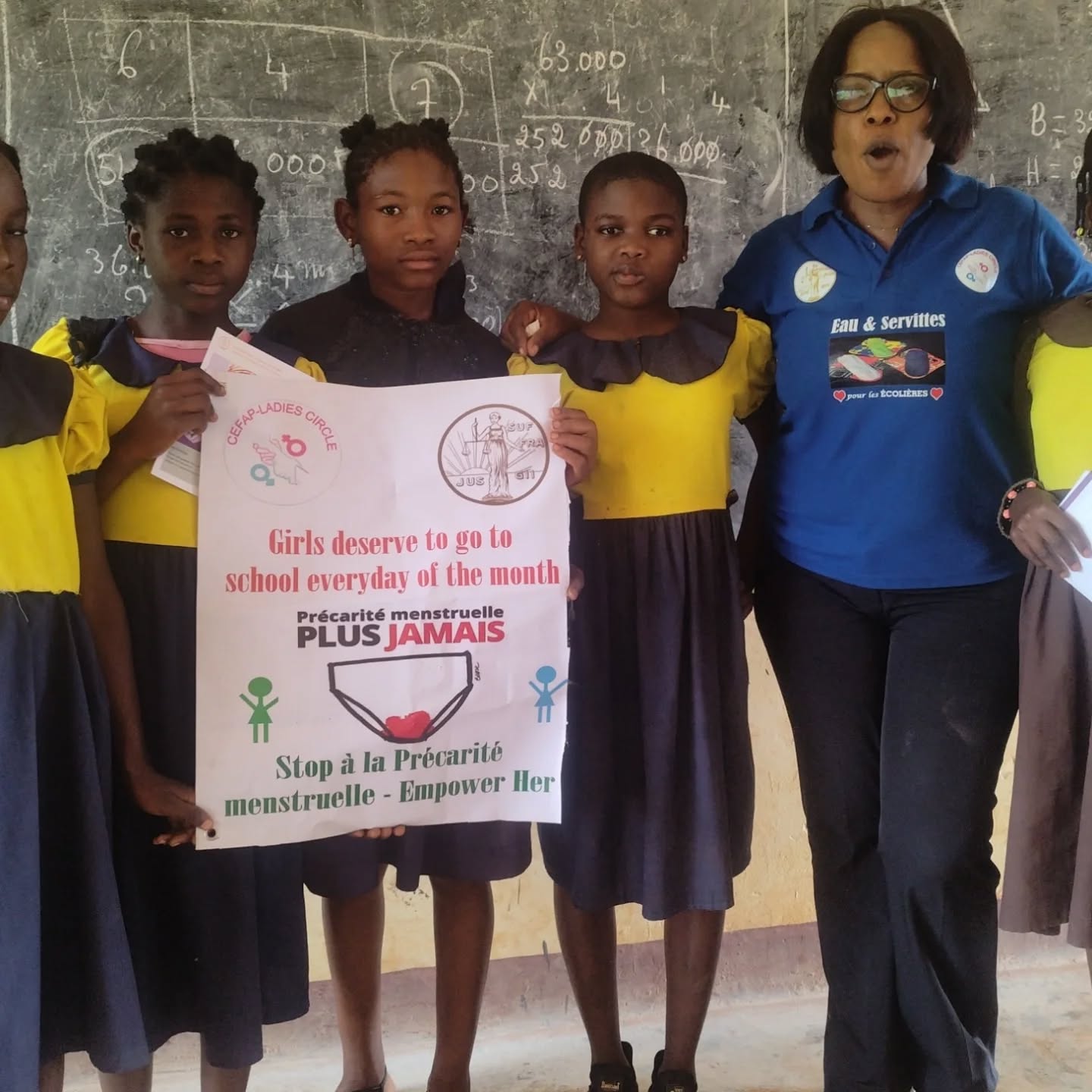
Without sanitary pads, village girls miss school every month. CEFAP gives them washable pads and menstrual hygiene education, starting in Tonga and Baham.
Every month, in Cameroon's villages, some girls stay at home. They are not ill: they have their period and nothing to use. Sanitary pads are expensive and hard to find, and in poor rural families they come after everything else. The result is lost school days, gaps that keep growing, and sometimes girls dropping out altogether.
What our study found
CEFAP carried out a study of rural women's menstrual hygiene practices. The findings are stark: nearly 73% of the women surveyed do not use sanitary pads, often because they have simply never heard of them. Education makes all the difference: 97% of women who went to secondary school know about sanitary pads, compared with 18.4% of women who cannot read. Many use old rags, a practice that undermines their dignity and puts their health at risk.
Washable pads and knowledge
Our response comes in two parts: providing washable, reusable pads that last, and teaching girls to manage their menstrual hygiene with dedicated booklets. In its pilot phase, the project gave 2,000 reusable pads to 200 girls in the villages of Tonga and Baham. The project is run with the International Alliance of Women.
Since then, Water & Pads has moved into classrooms: information sessions, booklets and, since the pandemic, handwashing buckets, because hygiene starts with access to water. On the banners of recent editions, the pupils carry the project's message: "Stop period poverty" and "Girls deserve to go to school every day of the month".
What comes next: a workshop run by women
As early as 2017, CEFAP was raising funds to go further. The plan is now taking shape: a workshop producing washable pads, which will give steady jobs to 20 women living in deep poverty and make kits for 2,500 girls in four villages, with a short guide to menstrual hygiene. Five trained volunteers will go out to communities to help habits change.
A kit of washable pads means a girl in school every day of the month. The workshop is seeking funding, and every contribution counts.